
Have you ever walked into a room and immediately felt at ease, but couldn’t quite put your finger on why? Often, it isn’t the furniture or the layout—it’s the lighting.
In our interior design practice, we often say that light is invisible architecture. Long before you notice finishes or furniture, your body responds to how a space is lit. Light shapes mood, perception, and comfort, quietly influencing how a home feels at every hour of the day.
In the world of interior design, lighting is the magic ingredient that can make a small room feel airy, a large room feel intimate, and your favourite textures come to life. A truly luxury interior is never lit by accident; it’s the result of a thoughtful lighting plan that balances technical precision with a warm, human touch.
If you’re looking to elevate your space, the best place to start is with the art of layering light.
The Art of Layering Light
Think of layering light like building an outfit. You start with a base, add functional pieces, and finish with accessories that make a statement. In home lighting design, we use three distinct layers to create a balanced, welcoming glow.
1. Ambient Lighting: Your Base Layer
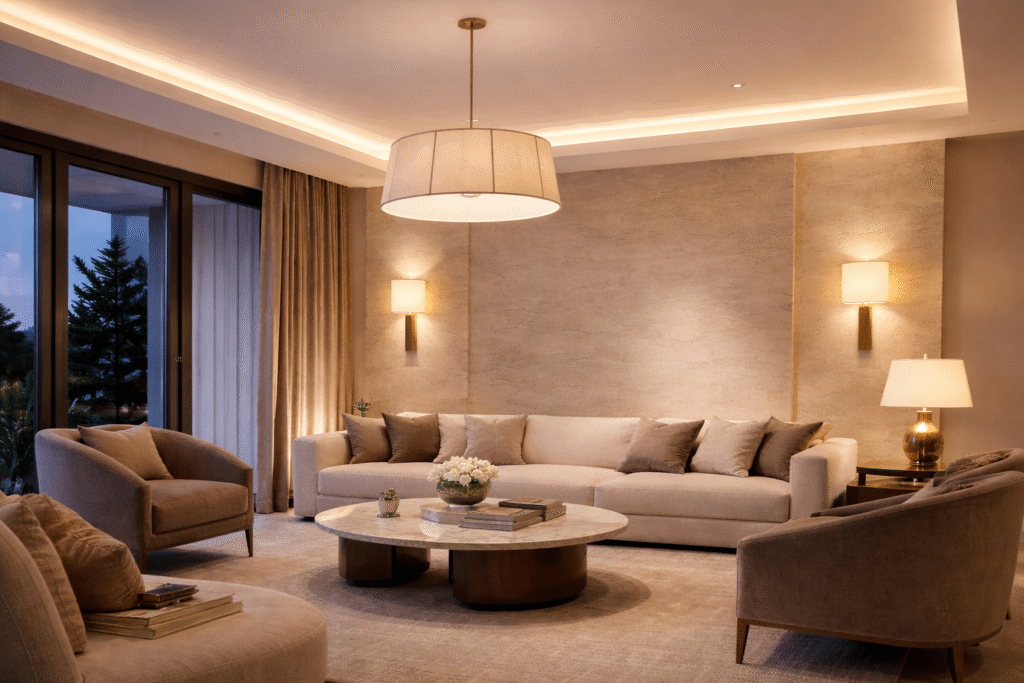
Ambient lighting forms the foundation of a room. Its role is to provide a soft, even level of light that allows you to move comfortably through the space.
In well-designed homes, ambient lighting is layered rather than uniform. Instead of relying solely on evenly spaced ceiling downlights, it is supported by indirect sources that gently wash the room with light and reduce harsh contrasts.
Common examples of ambient lighting include:
- Ceiling-mounted pendants or chandeliers with fabric, glass, or opal diffusers
- Concealed LED strip lighting within ceiling coves or recesses
- Wall washers that softly illuminate vertical surfaces
- Flush-mounted ceiling lights with diffused covers
- Indirect lighting concealed above wardrobes, headboards, or architectural ledges
When light is bounced off ceilings and walls rather than directed straight down, it creates a diffused glow that feels calm, flattering, and effortless.
2. Task Lighting: Your Practical Layer
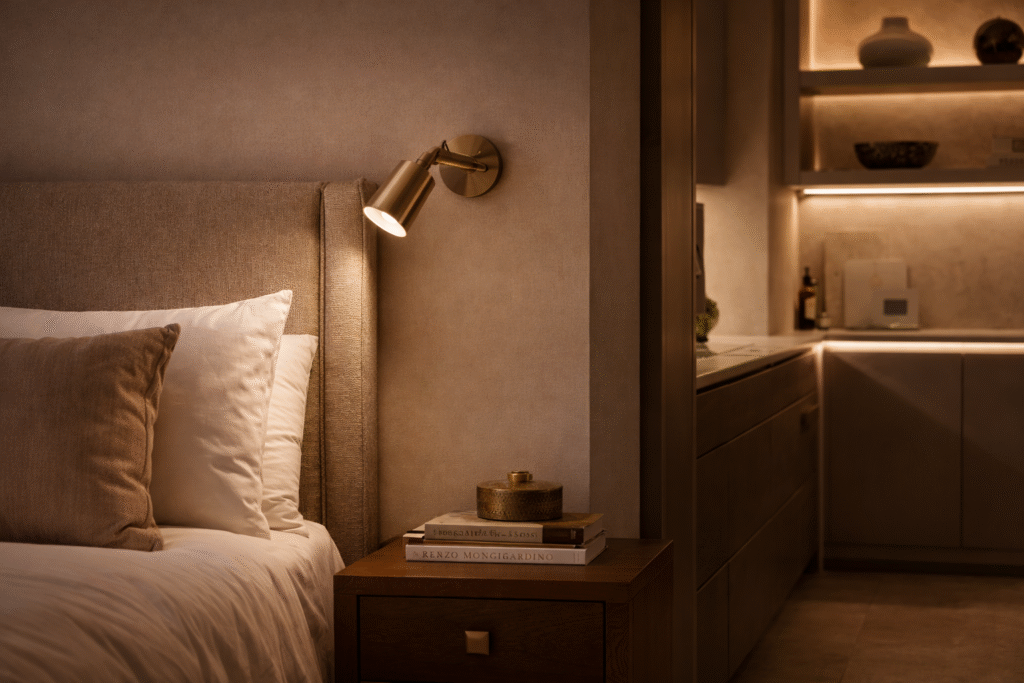
While atmosphere is essential, a home must also support the way you live. Task lighting is the focused layer designed for specific activities where clarity and accuracy matter.
This lighting is directional, controlled, and placed exactly where it’s needed—without competing with the ambient layer.
Examples of task lighting include:
- Under-cabinet lighting for kitchen worktops
- Adjustable reading lights mounted beside beds
- Desk lamps for work or study areas
- Vanity lighting positioned around bathroom mirrors
Precision matters here, which is why we prioritise high CRI lighting, ensuring colours appear natural and true—from food preparation to fabric selection.
3. Accent Lighting: Your Style Layer
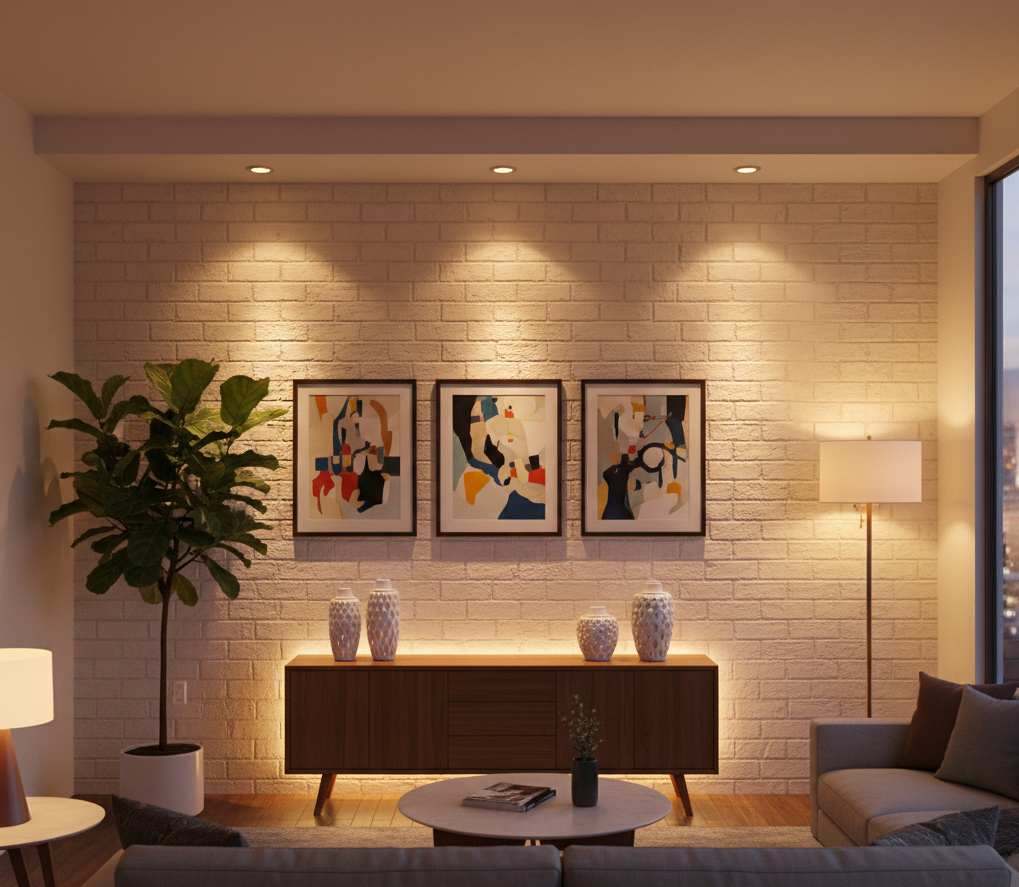
Accent lighting is where the home’s personality truly comes alive. This layer draws attention to architectural details, materials, and objects that deserve to be seen.
It introduces contrast, depth, and visual hierarchy within a space.
Examples of accent lighting include:
- Directional spotlights highlighting artwork or sculptures
- Integrated lighting within display shelves or niches
- Uplighting at the base of feature walls or architectural elements
- Backlighting behind mirrors, headboards, or decorative panels
A simple guideline we often follow is the 3-to-1 rule: accent lighting should be roughly three times brighter than the surrounding ambient light. This contrast creates depth and a refined, gallery-like quality that elevates a space.
Understanding Light
You don’t need to be technical to make good lighting decisions—but a little clarity goes a long way.
Lumens: How Bright Your Home Feels
Lumens measure the amount of visible light produced by a light source. Rather than assigning lumens to specific rooms, we think in brightness ranges and how they are layered together.
Well-designed homes rely on multiple light sources at different intensities, instead of one overly bright fitting dominating the space.
Understanding Lumen Ranges
| Lumen Range | Brightness Level | Common Uses |
| 200–400 lm | Very soft light | Accent lighting, decorative lamps, bedside lights |
| 400–800 lm | Gentle ambient | Wall lights, table lamps, mood lighting |
| 800–1,200 lm | Comfortable brightness | Pendants, general ambient lighting |
| 1,200–2,000 lm | Bright, functional | Task lighting, kitchen work zones |
| 2,000+ lm | High output | Large spaces, layered ceiling lighting, utility areas |
Design insight:
Layering several low-to-mid lumen light sources creates a warmer, more luxurious feel than relying on a single high-lumen light.
Kelvins: The Mood and Warmth of Light
Kelvins describe the colour temperature of light—not how bright it is. This directly affects the emotional tone of a space.
Lower Kelvin values produce warm, golden light, while higher values appear whiter or bluish and feel more clinical.
Understanding Kelvin Ranges
| Kelvin Range | Light Appearance | How It Feels | Best Used For |
| 2700K | Warm, golden | Cosy, intimate | Living rooms, bedrooms, dining areas |
| 3000K | Soft warm white | Balanced, elegant | Entire homes, luxury interiors |
| 3500K | Neutral white | Clean and alert | Kitchens, bathrooms |
| 4000K+ | Cool white | Crisp, functional | Utility areas, garages |
Designer rule of thumb:
For a cohesive, high-end home, stay within 2700K–3000K across all main living spaces. Consistency in colour temperature makes a home feel intentional and calm.
How Your Home Responds to Light
Different materials interact with light in different ways:
- Reflective surfaces such as mirrors, marble, and glossy finishes amplify light and brighten spaces
- Absorptive materials like dark matte paints, velvets, and rugs soften light and add depth
- Diffusive materials such as linen shades and frosted glass hold light gently, creating glare-free glow
Understanding this balance allows lighting to enhance, rather than compete with, your design choices.
Creating the Perfect Balance
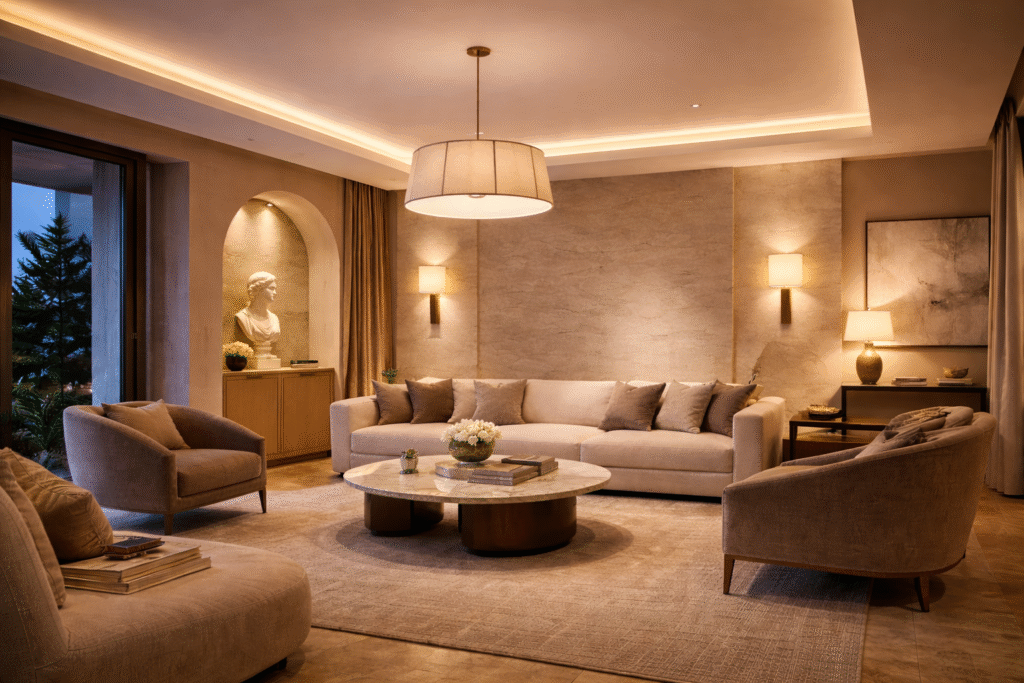
Great lighting isn’t about rules—it’s about rhythm. We consider height, intensity, colour temperature, and how each space is actually used. When ambient, task, and accent lighting work together, a house begins to feel layered, comfortable, and deeply personal.
Ready to See Your Space in a New Light?
Lighting is often the difference between a home that looks good and one that truly feels right. While the details matter, the final result should feel effortless and welcoming.
At our studio, we create bespoke lighting plans tailored to your home and lifestyle. If you’re curious about how thoughtful lighting could transform your space, we’d love to help you find its perfect glow.